01 / Leadership
Programs & people
Lead sustainability programs, coach teams, and build champion networks that help people turn firmwide goals into everyday practice.
For over 20 years, I've worked across architecture, construction, and business strategy to turn sustainability commitments into practical results.
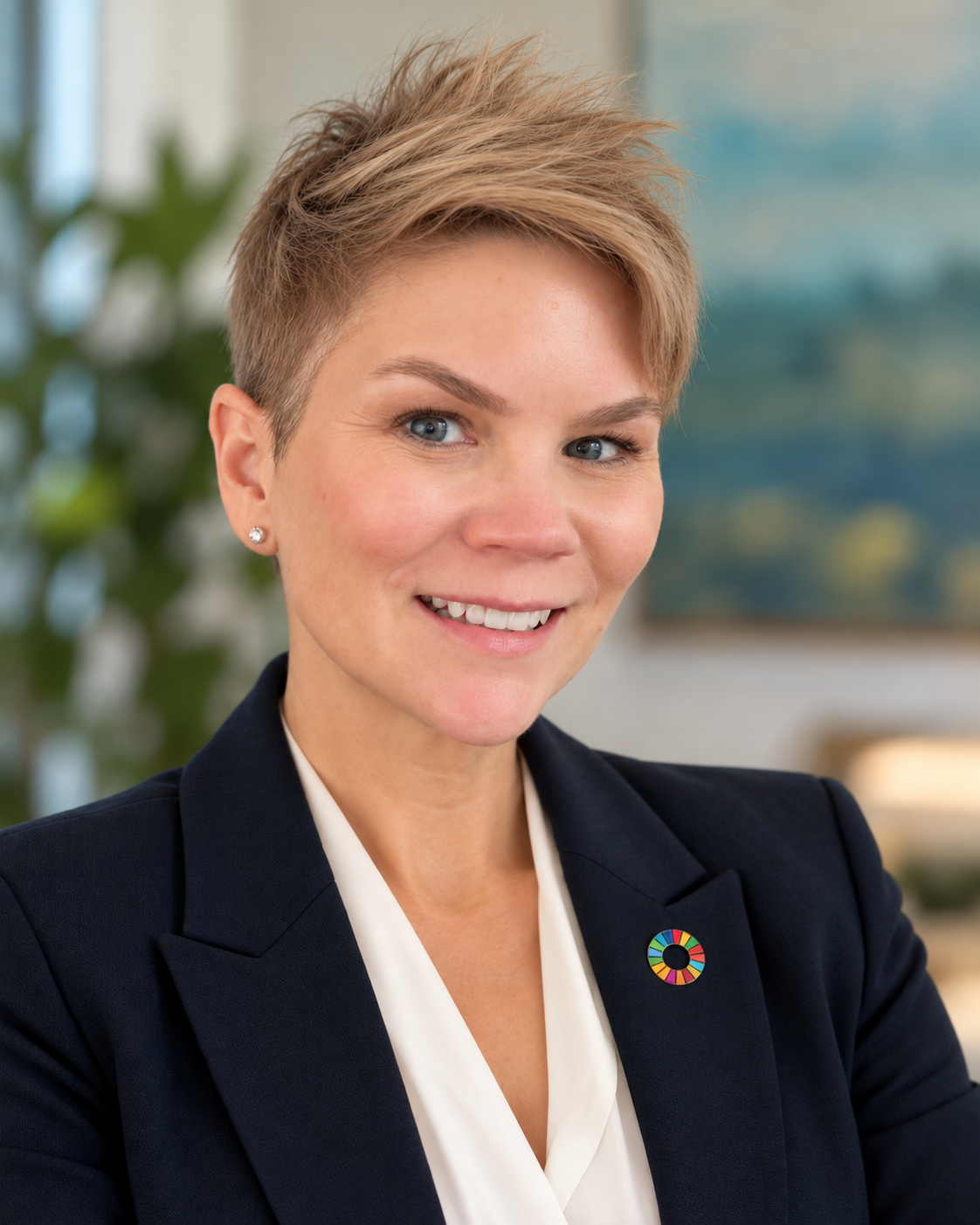
My approach is rooted in curiosity, respect for the people closest to the work, and the belief that environmental ambition has to meet financial and operational reality.
I grew up in a blue-collar family in southwest Iowa, near the borders of Missouri and Nebraska. Hard work, resourcefulness, and grit were not virtues that were discussed. These traits and the value of a dollar were just a part of life.
According to my mom, the houses I grew up in were “old, icky houses”. They were not the charming, renovated kind of old house you see on HGTV. The houses my parents could afford to rent had leaking roofs, drafty windows, and the walls were barely insulated. Midwest winters are brutally cold, and the summers are hot and humid. I understood the impacts of the weather on buildings before I learned about climate analysis, building envelope performance, and energy efficiency measures. I already had firsthand experience in what a poorly performing building felt like.
I became fascinated by the plug-in quartz heater that my mom used to warm up the bathroom prior to bathtime. I wanted to know why it made clicking sounds when it heated up, how it produced warmth, and why it used quartz. My parents had some of the answers, but this was long before the internet. My mom wrote to the manufacturer asking for help explaining it to me. Imagine how giddy I was to get the letter accompanied by a very technical manual that explained everything there was to know about the heater. I read and re-read the letter, sometimes asking what words meant, while my dad sat beside me flipping through the manual. We took the heater apart, identified the components and what they were for, and put it back together.
This taught me that curiosity was welcomed and there is always more to learn. For me, understanding how something works is a path toward improving it.
When I was little, we used to take annual trips to the Arbor Day Farm in Nebraska City, where I learned about the importance of trees and environmental conservation. But the Morton mansion was just as unforgettable because it was the fanciest house that I’d ever seen. I consider it to be my first introduction to architecture.
This was around the time that I started building things. Popsicle sticks were preferred because they were readily available and I loved how the dye colored the wood grain. I went through so many of them that my mom started asking my grandma, aunts, and eventually the church ladies to save them for me. At a larger scale, cardboard boxes were turned into clubhouses, forts, and connecting tunnels.
It channeled my creativity, gave me room to experiment, and let me explore the possibility in ordinary things.
One day we dropped my dad off at work and his boss showed us his new car. My dad sat in the driver’s seat with me in his lap and fired it up. I listened to the grumble of the exhaust, felt the rumble of the engine, and heard the guys talk about design and performance. Until then, I hadn’t thought about cars beyond how we got from one place or another or how stressed my mom got when ours wouldn’t start.
But this car was something different than the station wagons and pick-up trucks that I’d ridden in. This shiny black Corvette was dramatic, beautifully designed, and thrilling. It made me wonder: if houses and cars could be this much cooler than anything I knew, what other extraordinary versions of everyday things exist?
That question followed me into architecture, design, technology, and sustainability. I still love sports cars, but more importantly, I still love discovering what becomes possible when we challenge what we know.
My dad was a truck driver. My mom didn’t work until my dad was laid off, then she worked two minimum-wage jobs. It’s no surprise that growing up around truck drivers, farmers, and factory workers during the 1980s recession left a lasting impression on me. Regardless of my happy childhood memories, I was aware of the struggles. I’ve seen weather, commodity prices, fuel costs, and interest rates make or break people’s livelihoods.
Looking back, I realize that many of my childhood experiences were shaped by the difference between what was possible and what was affordable. We lived in houses that could have been more comfortable and efficient, but my parents didn’t have the resources to make those improvements. I built things with Popsicle sticks and cardboard boxes because those were the materials I had. And I remember being amazed by a mansion and a Corvette that showed me just how different everyday things could be.
Those experiences taught me that knowing how to make something better doesn’t necessarily mean everyone has the opportunity to do it. This is why I believe in doing better when we know how to. We know how to reduce energy and water consumption, how to use fewer resources, how to make more durable structures, and how to plan for extreme weather events. But I also know that ambitious sustainability goals must meet financial and operational realities. A strategy that looks good on paper but doesn't work for the people and businesses carrying it out isn't a real solution.
I am a first-generation college graduate. I do not come from a long line of architects, engineers, doctors, or lawyers. I graduated from Iowa State University with a Bachelor of Architecture and immediately moved to New York City. As my career progressed, I found that explaining my work to my family was hard. At work, I spoke about embodied carbon, building performance, land development and biodiversity, resiliency, water scarcity, material transparency, emissions inventories, green building certifications, and return on investment.
At home, I struggled to explain it to the people who know me best. The people who know about the price of gas, grocery bills, monthly utilities, interest rates on their houses and cars, insurance premiums, equipment maintenance, and making ends meet. They understand efficiency and resilience; they just use different words.
That taught me something essential about buy-in: the jargon of the boardroom cannot alienate the people responsible for implementing change. A superintendent needs to know what changes will affect the jobsite, if it adds extra work, if what we’re proposing makes sense, and how to deliver it safely, on time, and on budget. A business leader needs to understand risk and return. A family needs to know how it benefits them. Those perspectives aren’t competing interests.
Sustainability leadership means connecting the dots by listening to the people closest to the work, respecting their expertise, and translating strategy into something they can understand, believe in, and own.
I still ask the same questions that I asked as a kid:
How does it work?
Why do we do it that way?
What would make it better?
How can we improve people’s lives?
Can we save money?
My career has taken me from small-town Iowa to construction sites and boardrooms, but I haven’t left those early lessons behind.
Meaningful change takes technical rigor, makes economic sense, builds trust, and requires a willingness to put on your boots.
Connect the people, decisions, and systems that carry sustainability from early design through construction and corporate practice.
Lead sustainability programs, coach teams, and build champion networks that help people turn firmwide goals into everyday practice.
Guide teams from early goal setting through certification, connecting resilience, energy and water efficiency, and healthier materials to project priorities.
Connect sustainability goals to project scope, procurement, and jobsite delivery, helping teams manage requirements, responsibilities, and performance through closeout.
Assess the impacts of material choices through life cycle assessment, embodied carbon analysis, and engagement with suppliers and subcontractors.
Partner with clients and business development teams to define a practical sustainability approach, communicate its value, and plan the resources needed to deliver it.
Lead greenhouse gas accounting, climate action planning, and ESG reporting, translating performance data into priorities for corporate leadership.